
 Circular Agriculture
Carrying on the value of by-products.
From agricultural by-products to mushrooms, red worms and nourishment for crops.
 The cycle on the farm
From the soil,
back to the soil.
Agricultural by-products
Carrying on the value of rice straw.
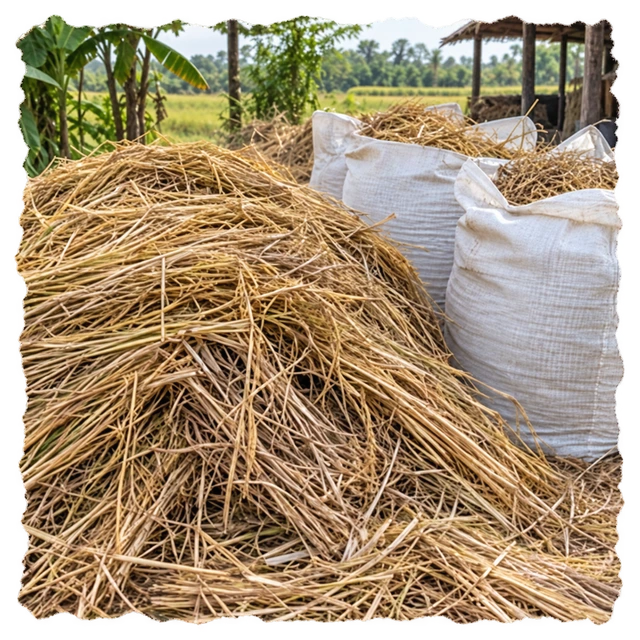
After each rice harvest, local rice straw is put to use as material for growing black termite mushrooms. Instead of being thrown away, the by-products become the input for a new production cycle at Nuong Farm.
The materials are checked before use, ready for treating and mixing into the substrate. From materials familiar to every rice field, the farm adds value through growing mushrooms.
Preparing the substrate
A nourishing base for the mushrooms to grow.
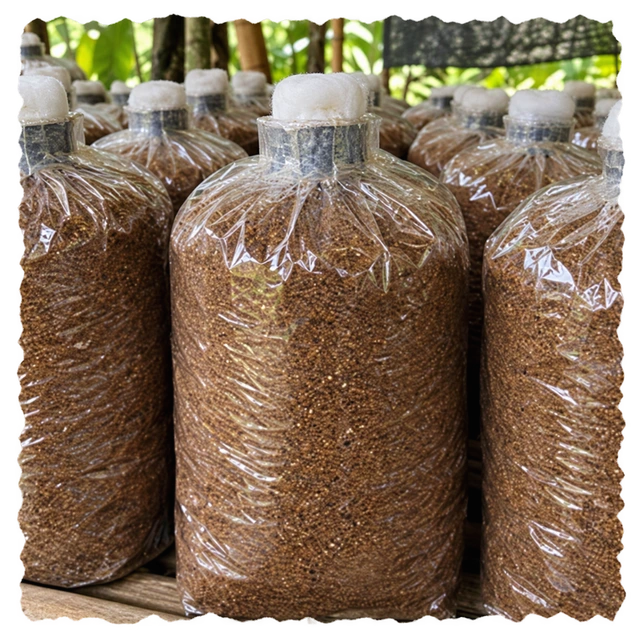
The straw is finely chopped and mixed with rice bran and corn bran to make the mushroom-growing substrate. The mix is packed into bags and steamed before the spawn is added.
Fineness, moisture and the quality of the materials are kept in check during preparation. The treated substrate is what feeds the mycelium in the next step.
Spawning & incubation
Nurturing the mycelium from within.
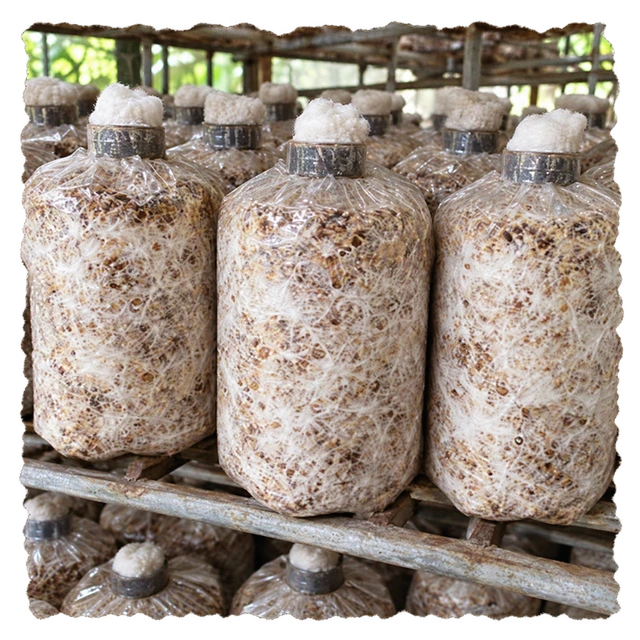
Mushroom spawn is added to the treated substrate, and the bags are set aside to incubate while the mycelium grows. As it spreads through the substrate, each bag becomes a spawn bag ready for growing.
Nuong Farm produces its own spawn and spawn bags on site, following their growth and checking their quality before they go into the grow houses or to growers who need them. Producing its own spawn lets the farm control what goes in and support growers with technical guidance.
Growing & harvesting
Tending the bags, welcoming each flush.
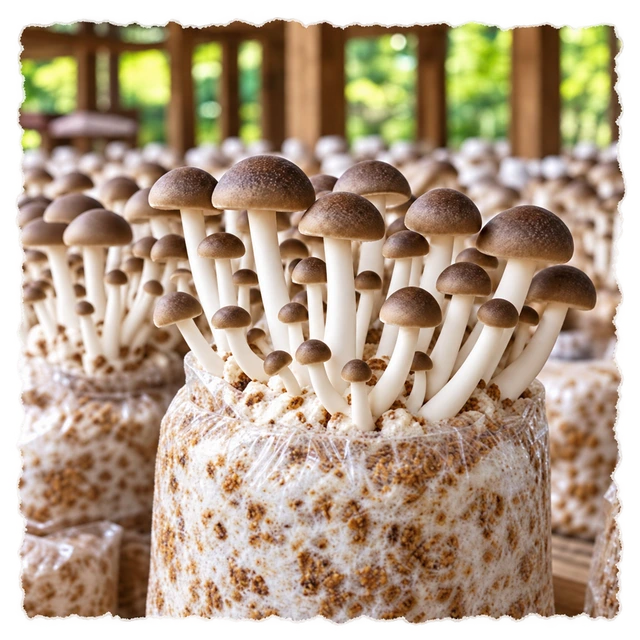
Once the mycelium has grown, the black termite mushroom bags are opened and covered with a layer of cleaned, sterilised sand. The grow houses are kept at suitable humidity and temperature, with a mist of clean water to help the mushrooms grow.
The mushrooms are watched and harvested over several flushes in each growing cycle. When the cycle ends, the remaining substrate moves on to the next use.
Substrate for red worms
After the mushroom season, the substrate stays useful.
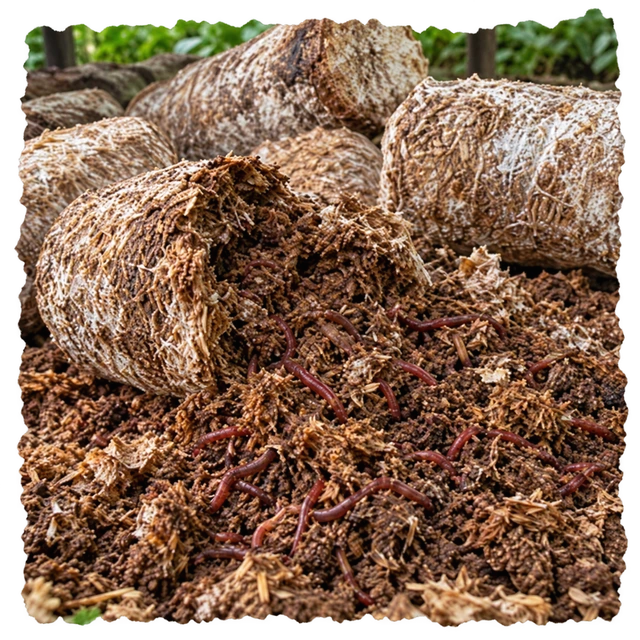
After a growing cycle, the substrate is gathered, freed of its plastic bags and put to use as feed for red worms. Material that once nourished mushrooms becomes the input for raising worms.
As the worms digest the organic material, the farm gains worm castings for its crops. This step draws more value from the spent substrate and reduces what has to be thrown away.
Worm castings for crops
Returning organic nourishment to the soil.
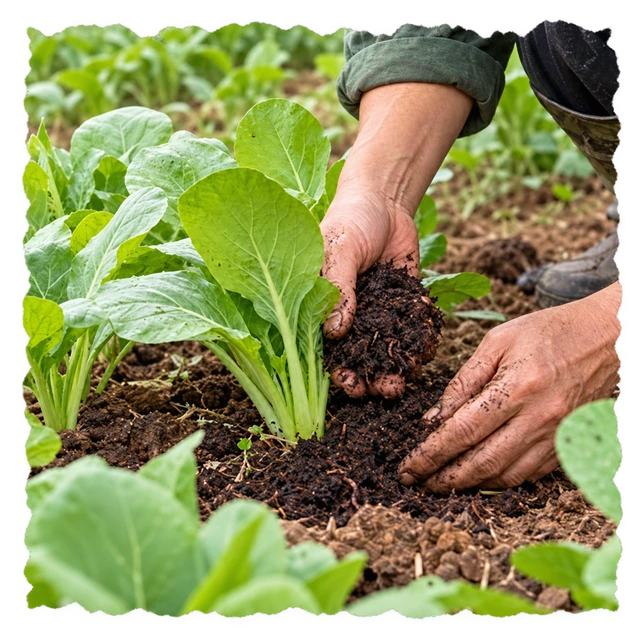
Red worm castings are used as organic nourishment for crops; at Nuong Farm they are also mixed with cow manure for fertilising. The product of this step is an organic fertiliser, kept separate from raising the worms.
The nourishment goes on to feed the soil and the crops. When the crops leave suitable by-products, those materials can be used in the next production cycles — carrying the journey on from by-products to mushrooms, from substrate to fertiliser, and back to the soil.
 Farm experience
Discover the mushroom farm
Come along with us to Trang trai Hien Nuong and discover the spawn bags and how mushrooms are grown in a cycle!
One trip, so much to discover
 Solar energy
Power from the sun.
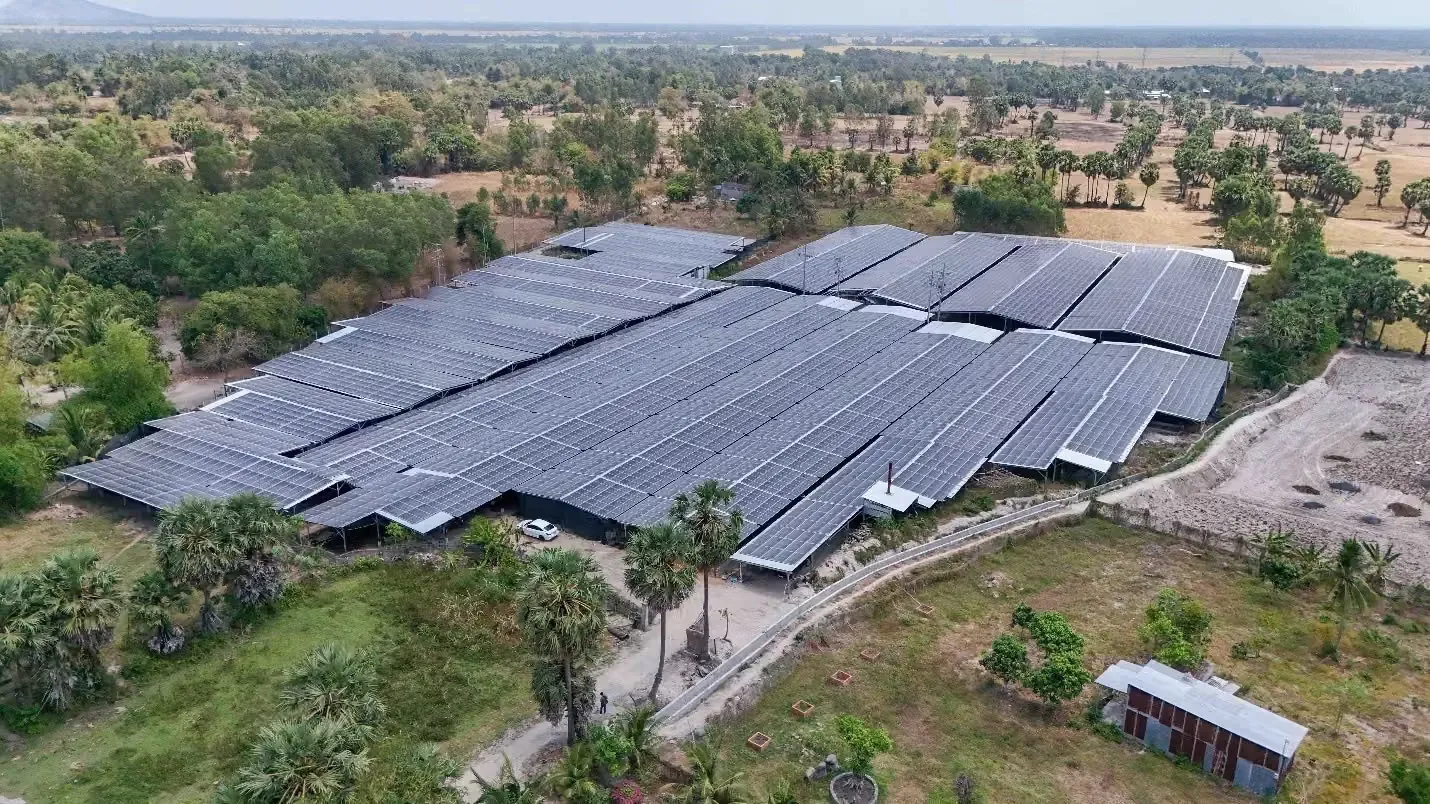
The farm is built on land that generates solar power. The whole system was built and developed by Ms. Chau Thi Nuong and Mr. Tran Phuong Hien themselves. 100% of the electricity used for growing mushrooms comes from this solar power.
On the same land, Nuong Farm combines clean power generation with mushroom growing, bringing energy made on site into everyday work.
- 100%
- Solar electricity for growing mushrooms
 Partner with Nuong Farm
Carrying the cycles of value forward, together.
If you are interested in our products, would like to learn about the model or discuss working together, we would be glad to talk with you.
Discuss a partnership